
Part 2
My intent in this writing is to evoke sincere and passionate thought regarding the Church. As it unfolds, if it appears that I am casting stones and chastening the sheep, this may be, and if so, I count myself among that number and I do not spare the rod even for myself.
In Part 1, I included some humor to soften the blow of what I want to talk to you about. I must also add that I am truly wondering if that inclusion was a good idea, for this is a solemn affair.
It is with reverence, and the greatest sensitivity and concern for my fellow believers, and His authentic Church that I pen these words. This should not be construed as a polemic, though at times it may venture into that realm. To some it will have the odor of iconoclasm, and I would sincerely hope so, for I desire change. Of one thing I am certain, at least parts of it will resonate with believers who genuinely seek Him.
The Lost and Worshippers
As the satirical introduction in Part 1 pointed out, the thing that glaringly stands out to me among the different denominations is the lack of real difference. While Luther’s “95 Thesis” may have brought about the Reformation, the fact remains that church is still pretty much the same as it has been for many centuries. I have visited churches of a variety of denominations; in some I have sensed His presence, while in others I have not. Mind you, failure to detect His Spirit may have been a result of my own spiritual dullness rather than an indictment against a particular church.
I am an avid Bible student, and I have a sincere passion for scriptural study. I might even add that my education is centered on biblical studies, but I learned long ago that a college degree only tells people one thing: that you have the ability to learn. If anything, nowadays, many have proven the converse in that they may have been more intelligent before it was educated out of them.
Bible study is a passion for me. I love the history and the stories of God’s interaction with mankind. It is His timing and interventions with the individual that intrigue me most: Adam, Enoch, Noah, Moses, David, the 12, and a man named Saul. By far the grandest of all could be called the Grand Intervention, the coming of Jesus Christ. Trying to understand God’s interaction with ungrateful creatures who are more often than not defiant to boot is challenging. We have no real concept of love like this, the closest being the love we have for our children, but even that is a poor analogy; we were His enemies, yet He still loves us. I have no answers for that level of love, but I receive it, and at times it seems that I do so almost grudgingly.
As you read the word of God, you find that God’s passion is human beings. He pursues us and woos us, showering us in his love. The Word reveals to us that He is looking specifically for two categories of people: the lost, and worshippers. The lost can be defined as those who do not know Jesus as their personal Lord and Savior. Drawing the lost is a work of the Holy Spirit, and our part as His Church, is sharing His gospel, and making disciples. This is a mandate given by Him to all believers. (See Matthew 28; Mark 16:15; Acts 1:8) While we each should boldly speak of Jesus; I am vehemently opposed to confrontational evangelism. The most effective method of sharing our faith is through the way we live, and this is exactly how the early Church proliferated throughout the Roman Empire. The disciple of Jesus is someone who adheres to His teachings and is dedicated to Him, and their life will reflect His influence. The disciple’s life is naturally intriguing as well as appealing to those God is calling. If we are truly His disciples, then telling someone we are Christian is really just an affirmation of what they already recognize.
A worshipper is one who, well, worships Him, and I would say that a worshipper, at least during his time of worship, is consumed with God. Worship is reverence for Him, a natural outpouring of love and adoration, gratitude, as well as a desire for intimacy with Him. It is in prayer where we discover that intimacy which enables us to fellowship with Him. Worship is a time of setting aside ourselves, our wants, our desires, even our petitions, to come before Him in adoration and thanksgiving. It is a time to express our love and gratitude to our Creator and seek His will and His desire. Prayer is the highest form of worship. A single person committed to prayer is greater than a thousand singing to Him because in prayer, that person is joined to Him.
God has sought worshippers throughout history. When the individual worshipper is joined with other believers, they become what constitutes the church. The word church used in the New Testament is the Greek word, ecclesia which means “an assembly or gathering.” The church is also referred to as the body of Christ, because it is His church; it is His body. So, the church is a gathering and fitting together of the parts of the body of Christ.
Where things went awry
I believe there are two changes that have taken place in the church which have been detrimental. The first would be the ecclesia/the church was transformed from a gathering of people to where people gather. The focus shifted from the people to the meeting place, quite literally a building. I will set this aside for the moment but will elaborate on that topic later.
The second critical misstep was made when we took the word worship,which means expressing our love and adoration for God and then redefined it as singing spiritual or spiritually sounding songs. The evidence of that assertion can be found in the fact that choir members are commonly referred to as, worship leaders. Singing and worship are not synonymous. Please understand that song can be a form of worship, but that is typically not what we find in the modern church. Song in the church environment tends to be a compulsory raucous accompanied by musical instruments for most church members. It is rare indeed that any semblance of worship comes through this avenue for the average congregant. The result is that genuine corporate worship of God seems to be either lacking or absent from the modern church. Once again, this may be my own spiritual torpor, but I don’t think so. I have spoken with countless others who share these sentiments, and each has had a genuine longing for worship to return to His Church.
The Way
For many years now I have struggled with the standard church service and have questioned the practice repeatedly. If it is His church, why are we not allowing Him to lead it? I dare say that what church has become is more of a man-made construct than one from God. If you think I am being irreverent to the church, you would be correct, I do not revere what we call church, but for His Church, the authentic Christ centered Church, the ecclesia, I have the greatest of reverence and love, and oh how I desire its return.
I am saddened at the dissonance between what the church is and what it should be. I am disturbed by this great chasm, and I do not believe that the majority of modern churches come within an astronomical unit of what Christ intended the church to be. What we do today bears little if any resemblance to that monumental movement known as The Way which centered on Jesus’ life, sacrifice, and His teachings. Just perform a cursory reading of the book of Acts and you will see the stark dichotomy between what they experienced and what we perform today. They were true disciples and were actively fulfilling the Great Commission in sharing the gospel and making disciples.
I confess, I sometimes wonder why I even go to church, and I am certain that question resonates in the minds of many. Church doesn’t just seem stale—lifeless is the word that comes to mind. It is a curious thing that I experience His presence in prayer, in study, and in our homegroup, but I cannot recall the last time I sensed Him in the modern church.
When I compare The Way to what we do today, the disparity is enormous. The early believers were on fire; they were hungry to know Christ and to serve Him and their brethren. Their service was not due to some undercurrent of legalism, or earning their way into God’s favor, but acts born out of love for those within the circle of believers as well as those without. They didn’t do church, they lived it, they were the Church.
When we gather together as the church, it is supposed to be a time of praising and glorifying Him. It is an opportunity to join other believers as one, as the Body of Christ and worship together expressing our love and devotion to Him openly and honestly, with no airs, no pretense. It is a time of seeking Him corporately. It is also a time for us to express our love for fellow believers and our sincere compassion for one another. It is a time of healing, uplifting and strengthening, a time of encouraging one another. The Church was the advent of a social organization of the highest order, one that was Christ centered. But from what I can see, most churches today are barely even sociable. The Way was an answer to the calling of the Holy Spirit to be united as one. It was a group of people called by God, who shared a common interest of serving God as well as others. The church is supposed to be a place of intimacy, where relationships can be born and friendships are formed, but I fear the church, the very hands and feet of Christ, more closely resembles a paraplegic than it does those vibrant believers of The Way.
Theologian N. T. Wright quipped, “Wherever St. Paul went, there was a riot. Wherever I go, they serve tea.” While the contrast is initially humorous, one can readily discern the seriousness that runs through Wright’s pithy statement. He was pointing out that the early church was a powerful, Holy Spirit filled group of believers that was literally changing the world. In Acts 17:6 we find such descriptive words as, “These who have turned the world upside down have come here too,” in reference to the effects the early Church was having on the world. I don’t know about you, but I have yet to attend a church in the western world that comes anywhere near “turning the world upside down.”
God’s plan for the redemption of man was funneled through Judaism. The Way could be referred to as Judaism in completion. Contrary to what many believe, Jesus Christ did not come to found a new religion, but to exemplify a way to live, and Christianity is based upon His teachings. At the foundation of The Way we find the beliefs that: Jesus Christ is God, that He entered this world as the Love and the Light in human flesh, He was crucified for our sins and opened the way to fellowship with God, He then rose from the dead and walked among believers, confirming that He had defeated death. I am convinced that these are facts, of which I am a staunch believer, as well as ardent defender. He empowered those early believers by filling each of them with His Spirit, and He is still doing the same today. So, with His ongoing activity, why is the western church about as lively as a three-day old corpse?
The Problem
I submit that the primary problem with modern Christianity is we have forgotten that it is His Church. To be part of the Church requires submission to Him, which implies submission to His leadership of His Church. It seems moronic to me to even have to write those words, submission to His leadership of His Church, in fact, I must question why a statement needs to be worded in such a way. Have we grown so complacent in our tradition that we have left Him behind? If that is so, then we no longer worship Him, but have become idolaters, worshipping our traditions and dogma. That sounds suspiciously similar to the activities recorded in the Gospels of which Jesus railed against.
The descriptions we find about The Way provide us with a picture of what Christ’s Church should be.
- The early believers did not attend a church; they were the Church. Those of The Way worshipped together in intimate settings, almost exclusively in each other’s homes and there was no clergy. Today we meet in buildings that are called churches and those attending are called members, parishioners, congregants, laity, etc. These are distinct and separate from those that lead the church, the clergy. In most churches this is typically a single person termed a priest or a pastor, and it is a salaried position. Depending upon the denomination, there may be a hierarchical structure where there are multiple levels of leadership.
The offices of the early church are listed in Ephesians 4 and were filled by those gifted by Christ Himself. The terms pastors, teachers, elders, and overseers are used interchangeably and describe the same position. These men gave of themselves through His empowering to share the Gospel and to also train those within the church body enabling them to do the same; they were fulfilling “The Great Commission” (Matthew 28). Though there was leadership and they did help support apostles and evangelists, as well as missionaries monetarily, I find no evidence that they paid anyone a salary. The operation of the early church was more like a family than the lucrative business it has become today. There was never supposed to be a separation of clergy and laity like we experience today. Along with the listed offices in Ephesians 4, we find the duty assigned to those filling those roles was, “for the equipping of the saints for the work of ministry, for the edifying of the body of Christ.”[i] Instead, today what we have for the most part are pew warmers and people performing rituals rather than becoming disciples of Christ. The fault lies with every person that calls themselves a Christian. I will add as a defense for most parishioners, I believe it has been done out of ignorance, but that is still really no excuse; if you are going to be a disciple, then you had better know what your Master requires of you.
The most erroneous position of leadership is that of priest or pastor. Some churches employ the former, typically in the Roman Catholic, Eastern and Oriental Orthodox, Anglican, Episcopalian, and a few other denominations, while protestants have the position of pastor. I find this interesting in that neither position is scriptural in the context that we now employ them, and both are looked to as spiritual leader and intermediary between God and man. Yes, the traditional protestant pastor is but a priest in different clothing.
When you study church history around 96 A.D., early church father, Clement of Rome made a connection between the Levitical priests and the leaders of the Christian church while addressing a problem of authority in the church at Corinth. His address was in the form of analogy, not doctrine. However, doctrine eventually came into existence following the conversion of Roman Emperor Constantine (312 A.D.), and the subsequent Edict of Milan in 313 which legalized Christianity. The church quickly adopted the offices of the Roman government for church administration in the form of bishop and presbyter. Some historians of church history go further and make a connection with the Greek Sophist, who were philosophers who offered their talents in rhetoric for remuneration.
Many churches will have elders and deacons, though these rolls seem to be rarely filled as they were intended to be. These positions were created to lead and teach, and to provide assistance to members of the church body. It seems that nowadays most filling those roles are appointed out of popularity rather than any particularly notable commitment to Jesus.
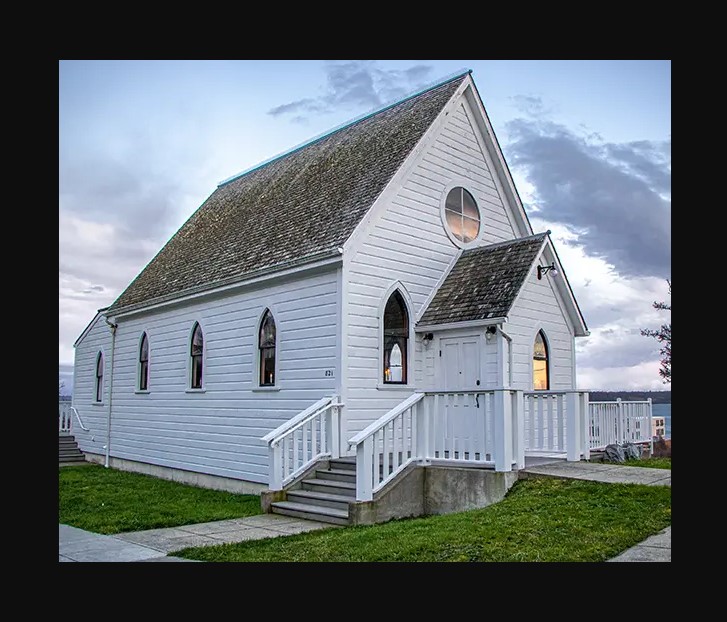
The church also soon became a building rather than an assembly of believers. Pagans worshipped in temples as did the Christian parent religion, Judaism. The people wanted a temple to worship in and along came the modern church building, and next the cathedral. While some people I have spoken with about church buildings have purported that a church can induce a state of reverence. My response is that I am quite certain those constructing the Tower of Babel felt the same way. While it is quite alright that we admire the craftsmanship of these structures and the men who created them, and even experience awe at the beauty of some churches, I would forewarn that to revere them is on the level of idolatry.
There is a plethora of information in the form of articles, essays, books, and more at your fingertips which addresses these topics. While there is no doubt that the church is fulfilling the Great Commission, I cannot but help but wonder how much greater its fecundity might be if the roles of priest or pastor in the sense they are employed today, had never been adopted. When pondering this, keep in mind that without the clergy all members of the ecclesia would be fulfilling the Great Commission. Instead, what we find is most sit back and let the clergy do all the work. What is more, the billions upon billions of dollars spent in the U.S. alone on church buildings and the clergy, were these expenses eliminated and we returned to home churches, we could quite possibly end world hunger and homelessness overnight.
- Those of The Way knew each other as family members, not merely superficially. They were all members of God’s family. There was genuine love between those of the early Church. They met on the first day of the week, Sunday, to worship and glorify Christ, and during that meeting they shared a meal together. There is much more to this practice than meets the eye. Sharing a meal with others openly displays our frailty to one another. We each must depend upon the fruit of the earth; we must consume what God’s creation provides in the form of vegetation and animals to provide sustenance to these bodies in order to survive. In an even greater way, we must continuously feed upon/submit to His Spirit to live and produce spiritually.
During this shared meal, those of The Way also placed a central focus on participating in the Lord’s Supper. They didn’t just eat these representations of His body and blood; they experienced a time of remembrance of His sacrifice. It was a memorial of what Jesus did on the cross, and this meal was mandated by Him for all those who were to become His disciples. Note: this wasn’t a stale cracker and grape juice either, it was real unleavened bread and real wine just as Jesus provided at the Last Supper.
Communion was such a serious affair that the Apostle Paul instructed believers to check themselves, to perform introspection to ensure that they were partaking in the meal rightly, in a state of understanding and reverence. This would mean making sure they had no unconfessed sin, but also, and primarily I think, that they were remembering Jesus’ sacrifice, what the meal was about in the first place. This reverential meal was meant to serve as a visible display to members of the Body of Christ, but also to others outside of the church. It portrayed what Christ had done and was continuing to do for those in the church and for all those He was calling to Himself. I will add that while I find no validity to the doctrine of transubstantiation, the reverence of communion (the Eucharist) during a Catholic mass is truly something to behold; it is also something missing in protestant churches.
- It was in this intimate home church setting that the people of The Way worshipped, and their genuine love for Christ was practiced. As a church grew, either the homeowner expanded his house, or another church started in someone else’s home, thereby propagating the church. There were no church building projects. Some even lived communally, selling personal properties to support those less fortunate within the Body of Christ. People of every ethnicity, every culture, every background were welcomed into this group.
Yes, there were problems in the early church. There were arguments, clicks and factions, there was in-fighting between coreligionists, there were false teachers creeping in; they experienced all those things just as we do today. But they seemed to be able to work through their issues without the animosity and the resulting splits we all too often witness. I believe the key factor in their ability to resolve their issues was they still sought His guidance; they recognized that it was His church.
It is estimated that there are now some 45,000 different denominations of Christianity, which are subdivisions of the 46 different types of Christian faith.[ii] These divisions were the result of disagreements over ritual, tradition, dogma and doctrine. This led to factions, then a subsequent church split, and from there the birth of a different brand of Christianity. If you want to see just how vindictive and evil people can be, just witness a church split.
Again, oh how far we have strayed.
Human beings are creatures of habit. Habits are things we can do with little forethought and do not require much energy to perform. An inherent danger with habitual activities is that they can transform into ritual, and then become tradition, and from there they come to be accepted as dogma and doctrine. We must be ever vigilant and guard against this transmutation! When we allow our traditions and doctrine to take precedence over what His Holy Spirit wants of His Church; we do in fact overrule Jesus Himself by adherence to them. And I have come to believe that this is the root of the problem: ritual and tradition. Nothing should become so ritualized that it supplants what He wants to do with His Church. It is His Church!
We need look no further than our founding religion, Judaism, to find proof of this problem. I believe what has occurred in the Church is a repeat of that very thing. When you read the Gospel accounts, you discover that Jesus battled the Jewish religious leaders regularly. They had taken the 613 individual laws given by God and created additional Oral Law and tradition, which were compiled into what is known as the “Mishna.” Another collection of rabbinic commentaries, interpretation, debate, and tradition were compiled into what is known as the “Talmud.” It was these interpretations, additions, and traditions that were crippling the Jewish people during Jesus day. The focus was no longer on loving God and worshipping Him but was rather on their tradition. From there the religious elite completely missed the message hand delivered to them by God. This self-induced blindness resulted in that they couldn’t see the forest for the trees that they themselves had planted. The problem is always man. Man’s summaries of God’s word are often little more than his own opinions and conjecture. God’s message was and is simple, that they/we love Him and love each other, but this proved to be too simplistic and was set aside. Rather than seeking a relationship with God and expressing genuine worship of Him, rituals and traditions became the focus of their worship, in order to earn their way to God. This is not only impossible, but is diabolical. This shift places man at the center and God once again takes the number two position. Church is not about you and I, nor is about tradition and ritual, it is about HIM! Shifting our focus from God to ourselves is what started this whole mess way back in Genesis.
Our King is Jesus, and we are to follow Him. When you study the Gospels what you discover is that Jesus never violated any precepts set in place by God, but He went against the grain of the traditions of the religious elite; in so doing, He was perceived to be an iconoclast. He assured them that He didn’t come to destroy the law or the prophets; he came to fulfill them.[iii] But He did intentionally shake up their beliefs in their traditions, rituals, and doctrine. He healed on the Sabbath. He defied the religious elite. He challenged the perverted religious system. He embraced the downcast, the pariah of society. He treated women as equals. He loved. And mind you, there is nothing that will get you into hot water with people quicker than challenging tradition, rituals, or doctrine.
They murdered Him for it.
I cannot help but wonder if that is what is occurring now. Have we become so complacent in our tradition, in our works, that we have lost our fervor, forgotten what He did on the cross? Have we murdered Him yet again?
I believe that there is a remnant within the church that still hears His voice. I also believe that these recognize that the church has strayed far away from what Jesus intended. It is these few that these words will resonate with, who want to shake up the status quo, and become as inflamed as those of The Way were.
I challenge the bold among you to bring this up in your homegroups and bible study meetings. If your church leadership will listen, then bring the message to them. If you are not involved in a homegroup, I encourage you to find one. The homegroup bears a far closer resemblance to The Way than what the traditional church does.
For those in leadership, I encourage you to go against the grain as Jesus did. Next Sunday when everyone arrives, forego the usual liturgy and instead open with a prayer seeking Him to lead His church. Ask Him what He wants service to be like that day. It is His church. That entire church service may be comprised of prayer after prayer, or it may consist of adoration, or singing, or it may constitute a time of fellowship with one another. It should be what He wants, and when He lets you know, then that is what should be done. I encourage you to be courageous and bold. Going against the grain may cost you your position in the church but so be it. This is about Him.
While I differ with some of her views, author Dorothy Sayers made one of the most astute observations in church history,
“The people who hanged Christ never, to do them justice, accused him of being a bore—on the contrary, they thought him too dynamic to be safe. It has been left for later generations to muffle up that shattering personality and surround him with an atmosphere of tedium. We have efficiently pared the claws of the Lion of Judah, certified him “meek and mild” and recommended him as a fitting household pet for pale curates and pious old ladies.”[iv]
I can assure you of one thing, seeking Christ first will stir people up. You too may (will) be perceived as an iconoclast. People resist change and will fight for their traditions even when they are clearly shown they are outdated or incorrect. Those that love Jesus will hear His call though, and they will be grateful.
In His love,
C. Klingle
[i] Ephesians 4:12
[ii] https://www.bartehrman.com/christian-denominations/
[iii] Matthew 5:17
[iv] Dorothy L. Sayers, Letters to a Diminished Church: Passionate Arguments for the Relevance of Christian Doctrine






Leave a Reply