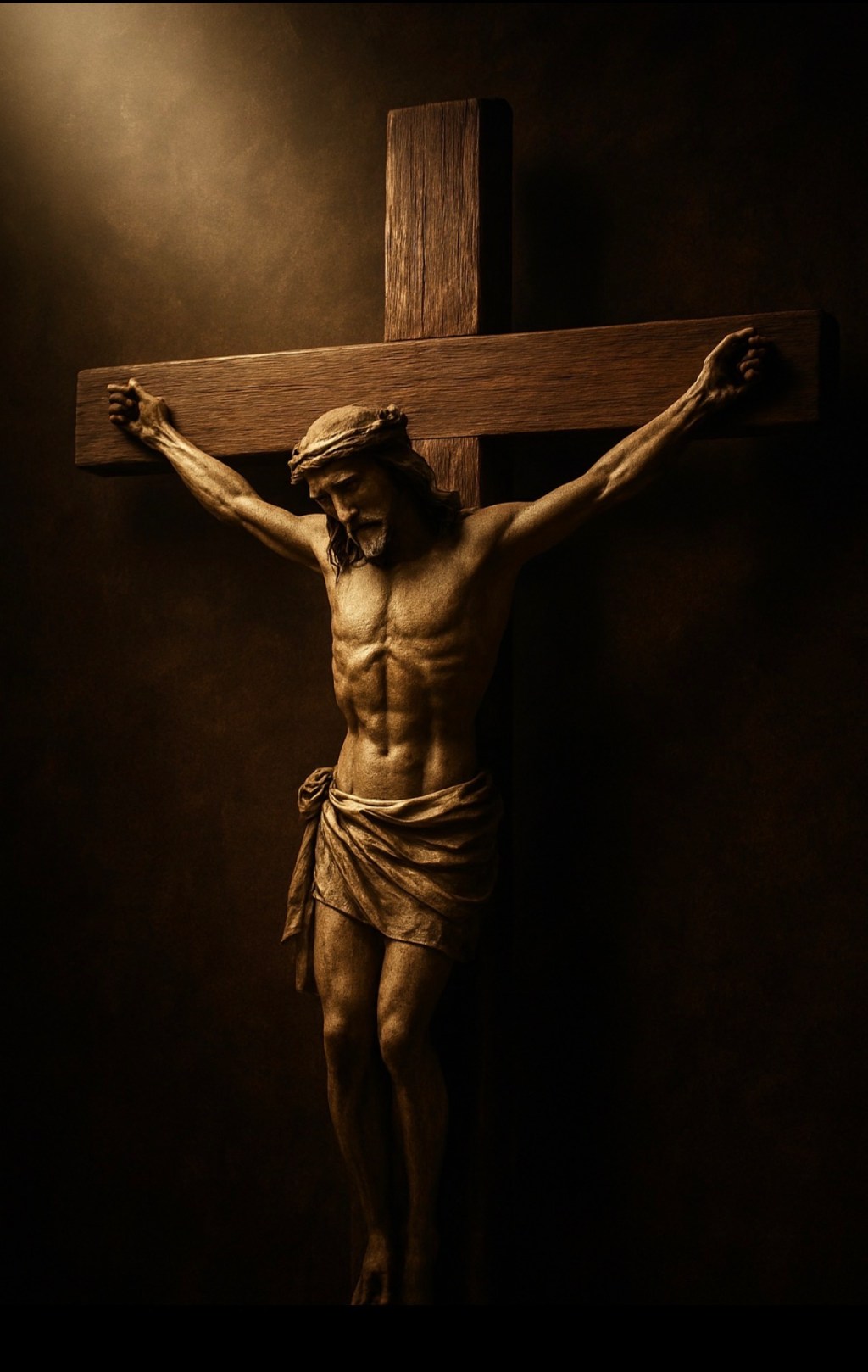
It takes a great God—greater than human imagination, greater than the darkest schemes of men, greater than the deepest wounds of sin—to take the most wicked instrument of torture and death and transform it into the very symbol of salvation, hope, and everlasting glory. The cross was never designed to bless. It was never crafted to comfort, inspire, or redeem. The cross was Rome’s ugliest invention—a scaffold for shame, a place where voices went to die, a wooden stage built for one purpose: to break a human being publicly, slowly, and mercilessly. It silenced rebels, criminals, and unwanted bodies. No one in the ancient world wore a cross around their neck as a sign of beauty. No one dreamed of it, sang about it, hoped in it, or used it as a symbol of love.
But God did.
In the mystery of divine wisdom, God took what humanity meant for humiliating death and turned it into the doorway of eternal life. He did not choose a throne, a sword, or a temple altar to display His greatest work—He chose the cross. This was not accidental. This was not a concession to evil. This was the eternal plan of a sovereign God who writes straight lines with the crooked timber of human sin. He took the world’s worst and made it the world’s best. He took the darkest moment in history and filled it with the brightest light of grace. The cross stands as the greatest paradox: evil at its strongest, and God at His most glorious.
Why does God work this way? Because only a great God can. Only a God who holds all authority can take the enemy’s masterpiece of cruelty and turn it into the centerpiece of redemption. Only a God bigger than sin can use sin’s own weapons to overturn it. Only a God whose love is stronger than death can walk into death’s fortress, tear down its gates, and come out with the keys in His hand. When Jesus stretched out His hands upon the beams meant to destroy Him, God was stretching out His plan that had been whispered from eternity. The nails were the world’s violence, but the offering was God’s victory. The thorns were the world’s curse, but the blood was God’s cleansing. The cross was the world’s rejection, but the resurrection was God’s “Amen.”
In that moment, the cross became more than wood. It became the hinge upon which all history turns. What had once been a symbol of defeat became a banner of triumph. What had been an emblem of shame became the crown jewel of Christian hope. What had been designed to dehumanize became the instrument by which humanity is reborn. No philosopher could have imagined it. No army could have accomplished it. No religion could have manufactured it. This kind of reversal belongs only to God—great, sovereign, holy, wise beyond all worlds.
And so the believer looks at the cross differently. We do not see a tool of death; we see the power of life. We do not see the triumph of evil; we see the overthrow of evil by a God who cannot be defeated. We do not see despair; we see the blazing heart of divine love. Every splinter, every drop of blood, every cry from the lips of Christ is God shouting into the universe that He alone is great enough to redeem what was meant to destroy. He alone can take the worst and make it the best.
If God can take the cross and make it glorious, then there is no place where His grace cannot reach. There is no brokenness He cannot heal, no darkness He cannot illuminate, no sin He cannot forgive, no life He cannot resurrect. The cross is His declaration that nothing is beyond His ability to redeem—not even death itself. Our world still produces its crosses—moments of suffering, instruments of pain, seasons of loss. Yet the God who turned Calvary into glory works the same marvel in the lives of His people. The cross assures us that God specializes in impossible turnarounds. He takes scars and makes them testimonies. He takes tears and makes them seeds of joy. He takes graves and makes them gardens.
It takes a great God to do that. A God who rules the universe yet stoops to bear a cross. A God who judges sin yet saves sinners. A God who defeats death by entering it. A God whose power is not diminished by evil but displayed through His conquest of it.
When we look at the cross, we are not looking at what man did to God—we are looking at what God did for man. And only a great God could take something so wicked, so violent, so dehumanizing…and make it glorious.
Don Craft




 Curtis Klingle
Leave a comment