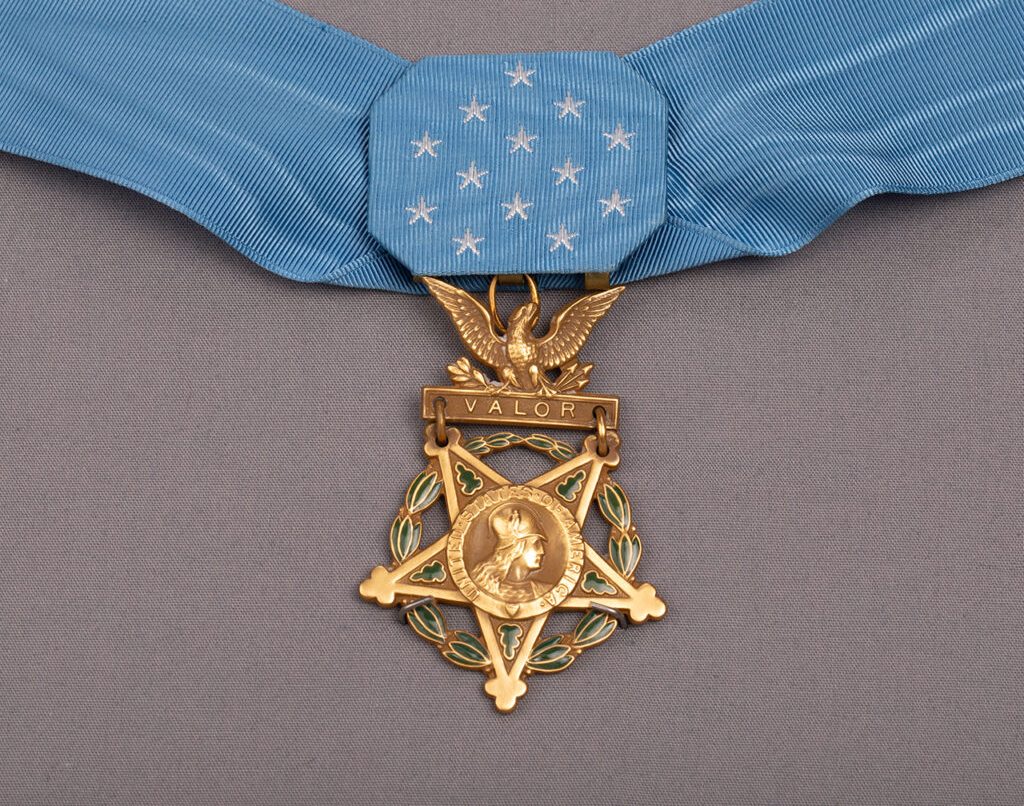
Audi Murphy
Audi Murphy has always been one of my heroes. I remember seeing the film, “To Hell and Back” when I was around 11 years old. The book upon which the film is based has the same title, and Murphy co-authored it with David McClure. It is a gritty first-person account of Murphy’s exploits during the Second World War. If you have never read it, I would highly encourage you to do so.
Murphy was rejected by the Marines and the Army Paratroopers because his stature, 5’5” and 110lbs, was deemed too small. He was however eventually able to enlist in the regular Army as an infantryman. This dirt-poor Texas boy saw the world through the iron sights of his rifle as he served in North Africa, Sicily, Italy, France, and Germany with the 1st Battalion of the 15th Infantry Regiment, 3rd Infantry Division. His prowess in battle and leadership abilities were noticed, resulting in his rapid promotion to staff sergeant, and later, receiving a field commission to 2nd lieutenant.
Surrounded by death and destruction, sleep deprivation, lack of food, and inferior gear, especially for much of the winter battles, Murphy and those who he served with, pressed on in the face of adversity that most know nothing about. Nearly all who he began the war with were lost to the enemy, but still he, and the other survivors continued to press forward, never knowing if the next bullet was meant for them.
On January 6th, 1945, Murphy, now in charge of B Company, found himself and his men under attack just outside of Holtzwihr, France. Six German tanks, and approximately 200 German infantrymen assailed his unit. A supporting U.S. Army tank destroyer was disabled and subsequently abandoned by the crew; Murphy took up a position behind it for cover and ordered his men into the nearby wood line while he held the forward position alone. Equipped with a field telephone, he directed artillery fire against the German advance. As the enemy tanks approached his position, Murphy mounted the now on fire tank destroyer with his field telephone in hand and began firing the destroyer’s 50. caliber machine gun at the advancing tanks and troops, all the while continuing to call in artillery rounds. The Germans were coming at him from three different sides, but they were taking heavy casualties. For over an hour the enemy made every attempt to dislodge Murphy from the tank, including one attack that came within 10 yards of his position. The following scene is straight from the book and records Murphy’s actions as well as communications with artillery units. No words of mine can convey the picture of that awesome and terrible day. Murphy tells it best, as only an eyewitness can.
“The body of the lieutenant with whom I talked early in the morning is sprawled over the edge of the hatch; his throat has been cut; a small river of blood streams down the side of the tank destroyer. I finish dragging the body out and dump it into the snow.
The telephone rings.
“How close are they?”
“50 over, and keep firing for effect.”
“How close are they to your position?”
“Just hold the phone and I’ll let you talk to one of the bastards.”
Hastily checking the machine gun, I find that it has not been damaged. When I press the trigger, the chatter of the gun is like sweet music. Three krauts stagger and crumple in the snow.
Crash! The tank destroyer shudders violently. Vaguely, I put two and two together and conclude that the tank destroyer has received another hit.
The telephone rings.
“This is Sergeant Bowes. Are you still alive Lieutenant?”
“Momentarily.” I spread the map on my left palm. “Correct fire:—”
Crash! I am conscious of a flash and explosion. I reel back with the map and telephone receiver in my hands.
“Lieutenant. Lieutenant. Can you hear me? Are you still alive lieutenant?”
“I think so. Correct fire: 50 over, and keep the line open.”[i]
Due to the heavy losses of their own infantry support, the German tanks eventually withdrew from the attack. Murphy kept up his defense of his position until running out of ammunition. Only then did he abandon the burning tank destroyer. Murphy headed to his men in the woods, organized them, and then led the counterattack from which the German’s eventually fled. His actions that day resulted in 50 killed or wounded enemy soldiers, saving his men from annihilation.
Audi Murphy spent some 400 days on the front lines during his three years of service, and is credited with 241 confirmed kills. What is more, he was wounded three times during the nine campaigns in which he fought. He was awarded medals of valor from the French government, including their highest award, the National Order of the Legion of Honor, grade of Chevalier (knight), and every medal for valor that the U.S. Army could bestow upon him, including the Congressional Medal of Honor.
For the rest of his life, he struggled with insomnia, PTSD, and afflictions associated with the things he saw and did during the war. He was very open about his post-traumatic stress disorder, and one of the first veterans to speak openly and candidly about his emotional suffering.
Audi Murphy remains the most decorated soldier in U.S. Army history.
C. Klingle
[i]Murphy, Audie (1996) To Hell and Back (pp. 241-242). FINE Communications






 Curtis Klingle
Leave a comment